Properly flashed and sealed installations by certified professionals do not typically void roof warranties. If you have a specific warranty concern, we recommend confirming with your roofing contractor or manufacturer.

Our solar-powered attic fans vent heat and moisture all day and into the night for a cooler home with whisper-quiet performance.
For proper roof protection year round, you need an attic ventilation fan with serious power to keep air circulating in your attic throughout the day. The RM 2400 solar attic fan features an industry-leading 35-watt solar panel to generate the energy necessary to maintain air exchange.
Available without ClimaSense™ Technology in our standard RM 2400 model.
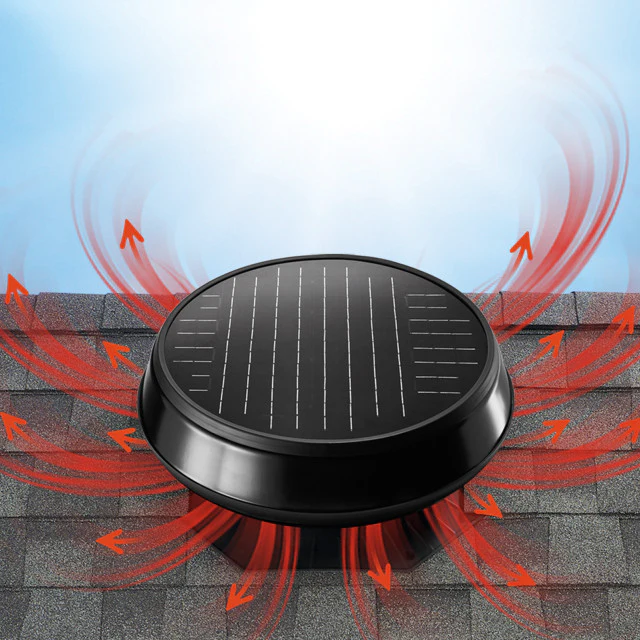
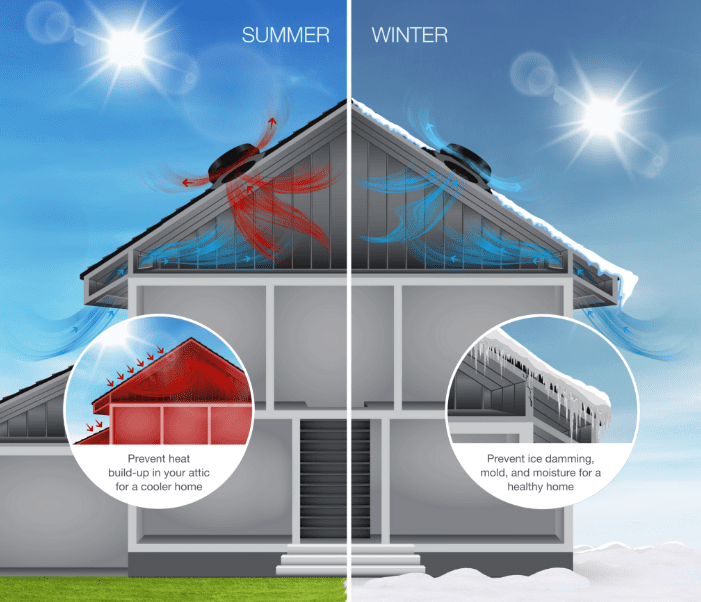
Each fan comes with Solatube’s breakthrough ClimaSense™ Technology—a smart system that ensures your fan runs exactly when you need it most.
Two Intelligent Modes:
Mode 1: Continuous Operation
Keeps your attic cool throughout the day and for up to 4 hours into the night.
Mode 2: Intelligent Response
Senses temperature and humidity and automatically activates based on real-time attic conditions.
This gives you consistent, worry-free ventilation—24/7 climate control with no switches or wiring require
Solatube attic fans help protect your home from the top down. By removing excess heat and humidity, they reduce the strain on your air conditioner, prevent mold and moisture buildup, and extend the life of your roof. Each fan operates whisper-quietly and is solar-powered—meaning zero electricity cost.
Want more out of your venting system? Solar Star Ventilation Fan add-ons maximize performance to ensure every inch of your attic is properly vented. More power to you.
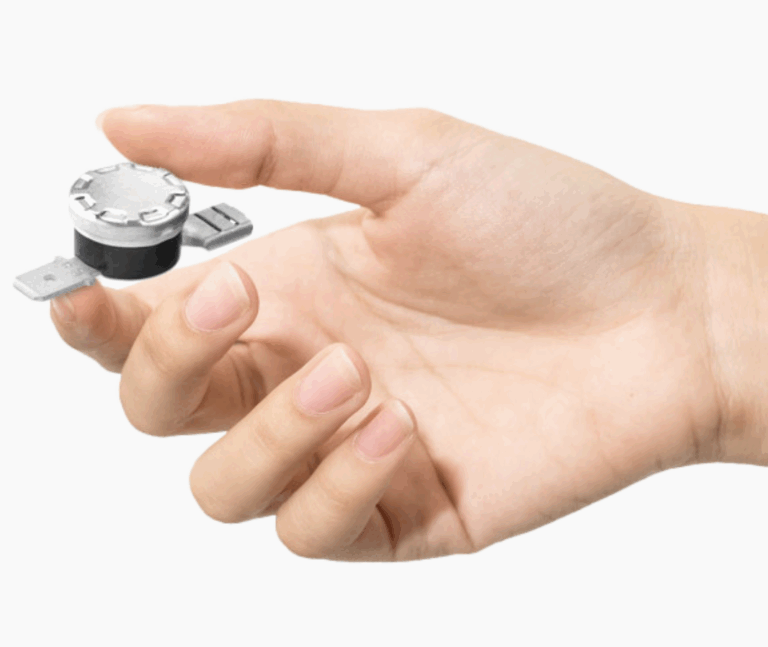
Add a thermal switch to your attic fan for precise control. It automatically turns the fan on at 85°F and off below 65°F—helping you maintain ideal attic conditions year-round.
Properly flashed and sealed installations by certified professionals do not typically void roof warranties. If you have a specific warranty concern, we recommend confirming with your roofing contractor or manufacturer.
They are often worth it for homeowners in the Carolinas dealing with a hot, stuffy attic, especially when the roof gets strong sun exposure and the attic ventilation system can support steady airflow. Because the fan is solar-powered, it runs without adding electric usage for operation, which is a practical advantage in long cooling seasons.
The best results come when the fan is sized correctly and the attic has enough intake ventilation. Carolina Skylights can tell you quickly whether your attic is a good candidate and what changes, if any, are needed for the fan to perform as intended.
A solar attic fan is installed on the roof and uses a built-in solar panel to power the fan motor. As the fan runs, it exhausts hot attic air to the outside. That outgoing air is replaced by fresh air entering through attic intake vents, most often soffit vents, which supports steady airflow through the attic during the hottest part of the day.
Some Solatube models add automatic controls. The ClimaSense Series uses temperature and humidity sensing to adjust ventilation based on attic conditions, which helps the fan run when it is most useful and reduces run time when conditions do not call for it.
Yes, solar-powered attic fans can work well when the attic ventilation system is balanced and the roof location gets consistent daylight. The fan’s performance depends on having enough intake ventilation to supply airflow and a roof placement that supports reliable solar power, since both directly affect how much air the fan can move.
Carolina Skylights confirms soffit intake, evaluates attic size and exhaust needs, and checks roof exposure before recommending a Solatube solar attic fan. That upfront review helps ensure the fan is sized and placed correctly, so it delivers meaningful heat and moisture removal in real-world conditions.
A helpful benchmark is warranty coverage and build quality, since the solar panel, motor, and housing are exposed to the elements. Carolina Skylights notes that Solatube solar-powered attic fans include durable, weather-resistant components and are backed by 10 years of coverage, which is a strong indicator of expected service life when installed correctly.
Real-world longevity still depends on installation details and ventilation balance. Correct flashing, proper placement, and clear intake paths help the fan move air efficiently without added strain, which is why Carolina Skylights evaluates attic intake and exhaust and installs the fan with the right roof flashing for long-term performance.
Common signs include an attic that feels extremely hot on sunny days, upstairs rooms that are consistently warmer than the main floor, and HVAC systems that run longer in the afternoon. Moisture-related clues can include musty odors, damp insulation, condensation on roof decking or fasteners, and staining that suggests trapped humidity.
Carolina Skylights can confirm whether these symptoms point to an attic ventilation problem, and whether a Solatube solar attic fan is the right fix or if intake venting improvements should come first.
Most solar-powered attic fans run when their solar panel is producing power, so airflow typically drops after sunset. They are built to do the heaviest work during peak sun hours, which is also when attic temperatures are usually highest.
That said, some Solatube solar attic fan options are designed to extend ventilation beyond daylight hours. The Solatube ClimaSense Series is made to provide continuous ventilation even after the sun sets, helping maintain more consistent evening airflow. Carolina Skylights will recommend the right model based on your roof’s sun exposure, your attic ventilation setup, and whether overnight ventilation is a priority for your home.
Sizing depends on attic square footage, roof design, and how much net free vent area you already have for intake and exhaust. A fan that is undersized may not move enough air, and a fan installed without adequate soffit intake cannot perform at its rated airflow because it is starved for replacement air.
Carolina Skylights evaluates your attic size, existing intake and exhaust ventilation, and roof exposure first, then recommends the right Solatube solar attic fan model and placement for reliable heat and moisture removal.
Yes, a solar attic fan can help reduce attic heat by exhausting hot air that builds up under the roof during the day. A cooler attic can reduce heat transfer into the living space, especially during peak afternoon sun, which can support more consistent indoor comfort.
Results depend on the full attic ventilation setup. Soffit intake ventilation, insulation levels, ductwork location, and air sealing all affect how much heat is trapped and how much the fan can remove. Carolina Skylights evaluates your attic first, then recommends a Solatube solar attic fan only when the attic size, ventilation balance, and roof exposure support meaningful heat reduction.
They work best when the attic has enough intake ventilation, and soffit vents are one of the most common intake sources. Intake vents supply the replacement air the fan needs to exhaust hot attic air efficiently, so limited intake can reduce results.
Carolina Skylights checks intake and exhaust balance before installation, then recommends the right setup so the fan can move air without fighting restricted airflow.
Yes, a solar attic fan can still run on cloudy days because solar panels can produce power from diffuse daylight, not only direct sun. Output is usually lower than it is on a clear day, so the fan may run at a reduced speed when the sky is heavily overcast or when the roof is shaded for part of the day.
For consistent performance in the Carolinas, the roof location matters. Carolina Skylights checks sun exposure, shading, and the attic layout before recommending placement. If your roof has limited sun, Carolina Skylights can also recommend Solatube options designed to keep ventilation steady beyond peak sun hours, including models in the ClimaSense Series that are built to run all day and continue into the evening.
Because solar attic fan installation often involves roof work, flashing, and ventilation calculations, DIY is risky. A common failure point is inadequate intake ventilation, which reduces performance and can create pressure issues.
Carolina Skylights looks at your attic ventilation as a system first, including intake, exhaust, and roof exposure, then matches the right Solatube attic fan setup to your attic and roof. Professional installation also ensures the correct flashing and mounting method for your roofing material, which helps prevent leaks and protects long-term performance.
The cost to install a solar attic fan depends on your roof and attic conditions, not just the fan itself. Projects often land in the high hundreds into the low thousands, with pricing influenced by roof pitch and material, roofline complexity, attic access, and whether any ventilation improvements are needed to support proper airflow.
The biggest cost drivers are the mounting and flashing approach, how the fan is sealed to the roof, and whether your attic has enough soffit intake ventilation to feed the airflow the fan is designed to move. Carolina Skylights can give you a reliable, home-specific estimate after a quick evaluation of roof sun exposure, existing intake and exhaust ventilation, and the best placement for your Solatube solar attic fan to perform as intended.
Yes. Solatube solar attic fans are solar-powered, meaning zero electricity cost to operate. By removing excess heat from the attic, they reduce the strain on your air conditioner and help keep indoor temperatures more consistent, which lowers HVAC costs year-round. Any cooling benefit comes at no added cost to your energy bill.
Solatube solar attic fans feature whisper-quiet brushless motors that operate silently. They deliver powerful ventilation without disrupting your home environment, and require no filters or ongoing maintenance.
No. Solatube solar attic fans provide year-round protection for your home. They remove excess heat and humidity from the attic, which helps prevent mold, rot, and water damage in any season. By reducing thermal stress on structural materials, they also help extend the life of your roof and insulation throughout the year.
No FAQs found matching your search.
We use cookies to improve your browsing experience, measure visits, and understand advertising performance. By clicking Got it, closing this notice, or continuing to browse, you consent to our use of cookies.